Guide
How to choose heated gloves: a plain buying guide
There is no single best pair of heated gloves. The right pair is the one that keeps your hands warm for what you actually do, fits your hand, and tells you the truth about its battery. This guide walks through what to check, in the order that matters most.
We sell one pair of heated gloves, so we have an interest. We have kept this guide general on purpose: it does not rank brands, and where our own glove does not meet a need, we say so.
Updated · Specifications are the maker's own. Where the maker gives no figure, we say so.
Start with what you will be doing
The same glove can be right for one person and wrong for another. Before you compare features, be clear about the job:
- Standing still in the cold (the sideline, a bus stop, a dog walk) needs steady warmth more than grip.
- Moving fast in wind (cycling, skiing) needs a glove that blocks wind and still lets you brake, grip a pole or use a zip.
- Wet work (snow play, fishing, washing down) needs a glove that is stated to be waterproof. Most insulated gloves are not.
- Hands-on tasks need dexterity, and some jobs need a rated safety glove that a heated winter glove is not.
If you mostly need warm hands in dry cold, a heated winter glove is a good fit. If you need a waterproof or safety-rated glove, make that the first filter and only then look at heat.
Where the heat goes
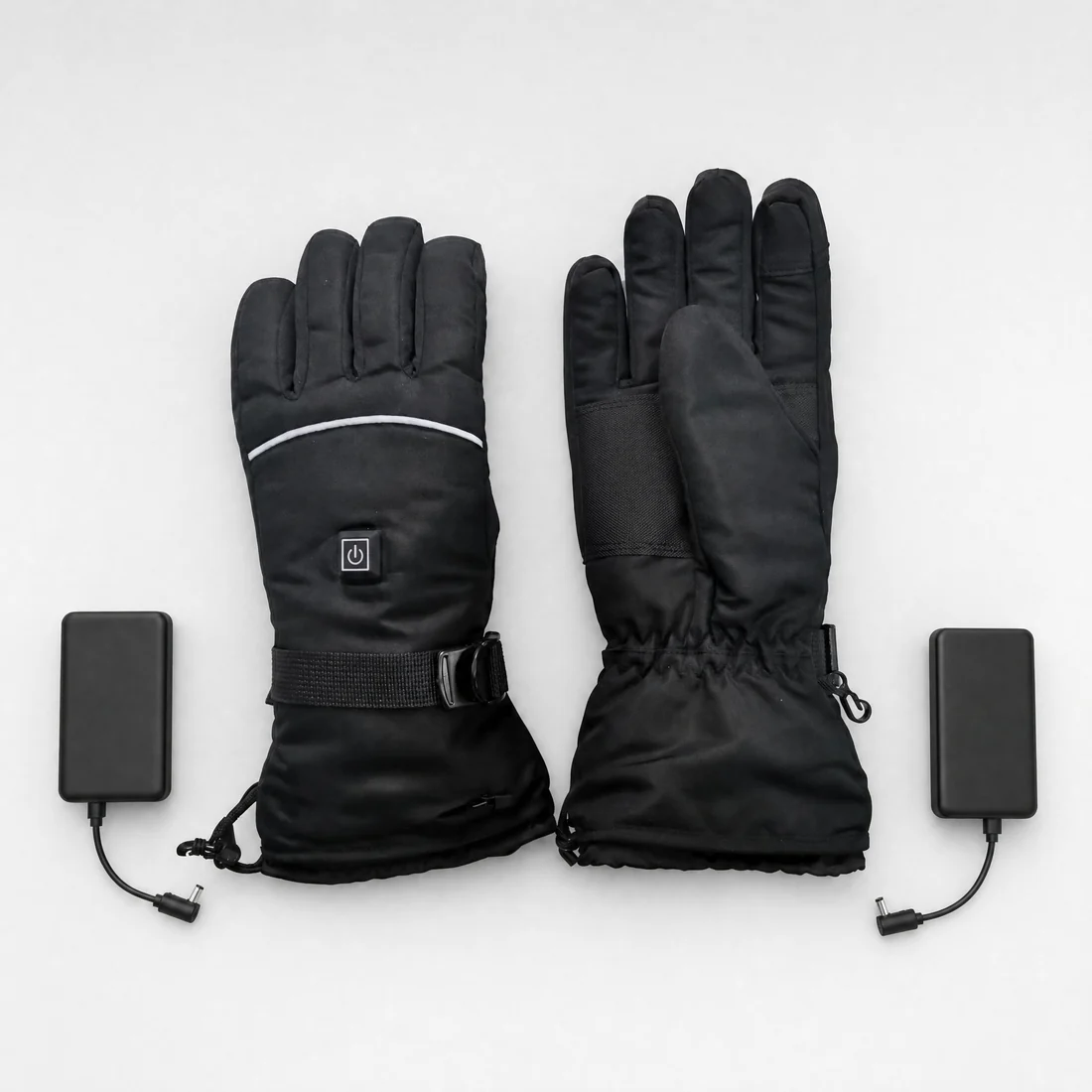
Heated gloves warm your hand with a thin heating element sewn into the glove. Gloves differ in where that element runs. Some heat the back of the hand only, some run along the fingers, and some reach the fingertips.
Cold fingers are the usual complaint, so look for a clear statement or diagram of where the element runs. If a listing only says the glove is heated, ask. A glove that warms the back of your hand will still feel better than an unheated one, but it will not do as much for numb fingertips.
The battery: what to ask for
Many rechargeable heated gloves use a small lithium power pack for each glove, carried in a pocket at the cuff. Three things decide how useful that pack is:
- Capacity, usually given in mAh. A larger number generally means more heat time, but a bigger pack is also heavier at the wrist.
- Run time. If a run time is quoted, check which heat setting it is measured on. A figure for the lowest setting is not what you get on the highest.
- Spare packs. If you want to stay out longer than one charge, check whether the seller sells a spare pack that fits that exact glove.
Be wary of a run time with no setting attached, and of claims that sound far longer than other gloves of the same size. Cold weather also shortens any battery's run, so treat any figure as a best case.
Our own glove is a fair example of a gap: the maker does not publish its battery capacity or run time, so we do not state them, and we do not sell a spare pack because the supplier does not offer one that is confirmed to fit. Read more about rechargeable gloves.
Heat settings and controls
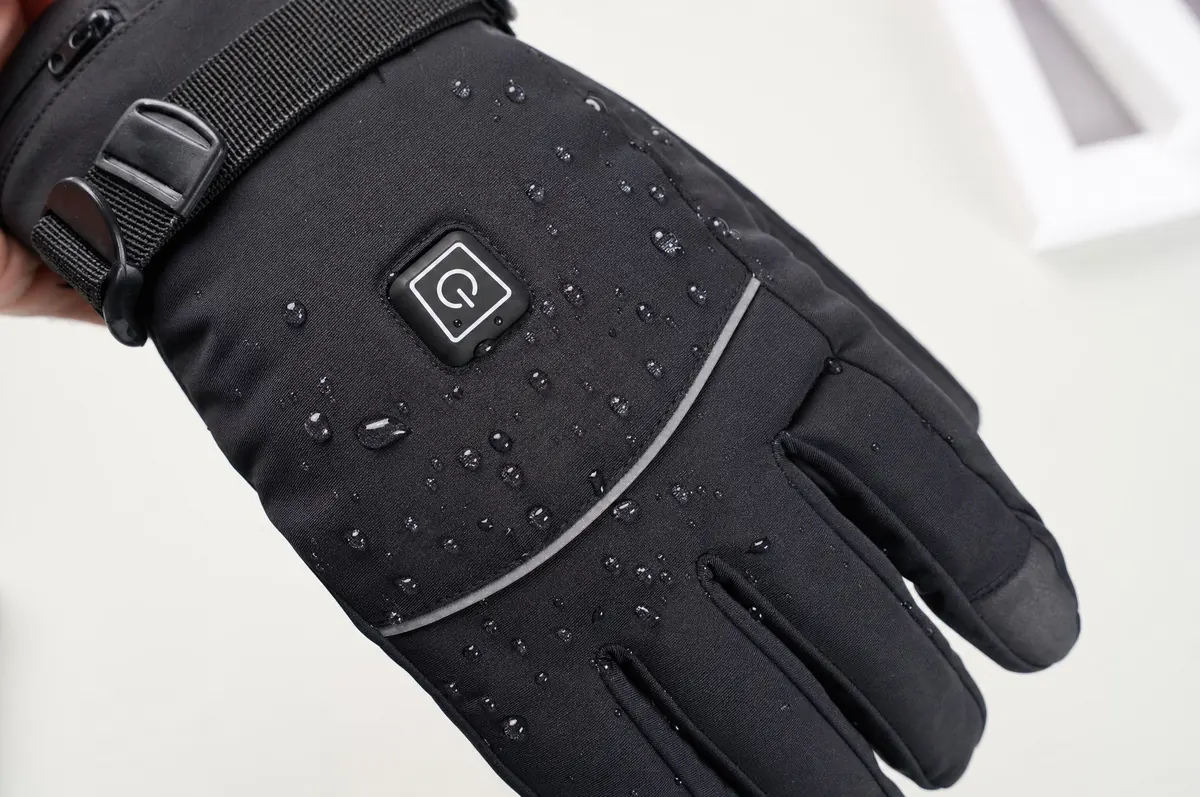
Heated gloves usually have a small number of heat settings, often switched with a button on the back of the hand. More settings are not automatically better. What matters is that you can find the button with a glove on, and that you can tell which setting you are on, by a light, a color or a count of presses.
If a maker gives temperatures for each setting, that is useful. Many do not. Our glove has three heat settings, switched with the button on the back of the hand, and the maker gives no temperatures for them.
Fit and sizing
Fit matters more with heated gloves than with ordinary ones. The element only warms you where it touches your hand, so a glove that is too big leaves cold gaps, and one that is too small presses the element against your fingers and limits grip.
Look for a size chart with real hand measurements, usually the width around the knuckles and the length from wrist to fingertip. If a seller lists only letter sizes with no measurements, ask before you buy, and check the return terms.
Our glove comes in one size, L, and the maker gives no hand measurements. If you are not sure it will fit, email [email protected] before you order.
Dexterity and touchscreens
A heated glove carries an element, wiring and a cuff pocket, so it is usually thicker than an ordinary winter glove. Think about what you need to do with it on: zips, keys, a bike brake, a phone.
Touchscreen panels on the thumb and index finger let you answer a call or check a map without taking the glove off. They work best for taps and swipes, not fast typing. Our glove has touchscreen panels on the thumb and index finger. More on touchscreen heated gloves.
Weather: waterproof, windproof and insulation
Heat helps, but it is not the only thing keeping you warm. Wind cuts through thin fabric and wet gloves lose warmth fast. If you will be in snow, rain or water, look for a glove that states a waterproof membrane or rating, not just a water-resistant finish.
Insulation is the backup when the battery runs down. A glove with real insulation stays reasonably warm with the heat off, while a thin liner does not.
Our glove is an insulated winter glove with a velvet thermal lining and a double-strand taslon outer. The maker does not state that it is waterproof or windproof, so we do not claim either.
Charging, care and safety
Check how the packs charge and what comes in the box. Charge them with the method the maker gives, and do not leave them charging unattended. Look for washing instructions too. Many heated gloves cannot go in a washing machine, even with the packs removed.
Ask whether the seller lists any safety certification for the battery or charger. If none is listed, assume there is none rather than guessing. The maker of our glove lists none, and gives no washing instructions, so we suggest taking the packs out and wiping the gloves with a damp cloth.
A quick checklist before you buy
- Does the heat reach the fingers, or only the back of the hand?
- Is the battery capacity stated, and is any run time tied to a named heat setting?
- Can you buy a spare pack that fits this exact glove?
- Is there a size chart with hand measurements?
- Is it stated to be waterproof, if you need that?
- Can you use a phone, zip or brake with it on?
- What are the washing instructions, and the return terms?
If a listing cannot answer most of these, that tells you something too. For a broader look at whether heated gloves are worth it at all, see are heated gloves worth it.
Questions
What are the best heated gloves?
It depends on the job. For dry cold and standing around, a heated winter glove with fingertip heat and a clear battery spec is a good start. For wet snow or water, choose a glove stated to be waterproof first. For hands-on work, check whether you need a rated safety glove.
Are more heat settings better?
Not by themselves. Two or three settings you can switch easily with a glove on are more useful than many you cannot tell apart. Our glove has three.
Do heated gloves heat the fingertips?
Some do and some do not. Check where the heating element runs before you buy. If a listing does not say, ask the seller.
What should I look for in the battery?
A stated capacity, a run time tied to a named heat setting, and a spare pack that fits the exact glove if you want longer use. Our maker publishes none of these figures, so we do not state them.