Guide
Heated cycling gloves: warm hands on a winter ride
Hands get cold on a bike faster than almost anywhere else. They sit out front in the full wind, they barely move, and they are wrapped around cold metal or rubber. Ordinary winter gloves often lose that fight within the first few miles.
Heated gloves add warmth instead of just holding it in, which is why riders who commute through the winter often end up trying them. Here is what matters on a bike, and where our pair fits.
Updated · Specifications are the maker's own. Where the maker gives no figure, we say so.
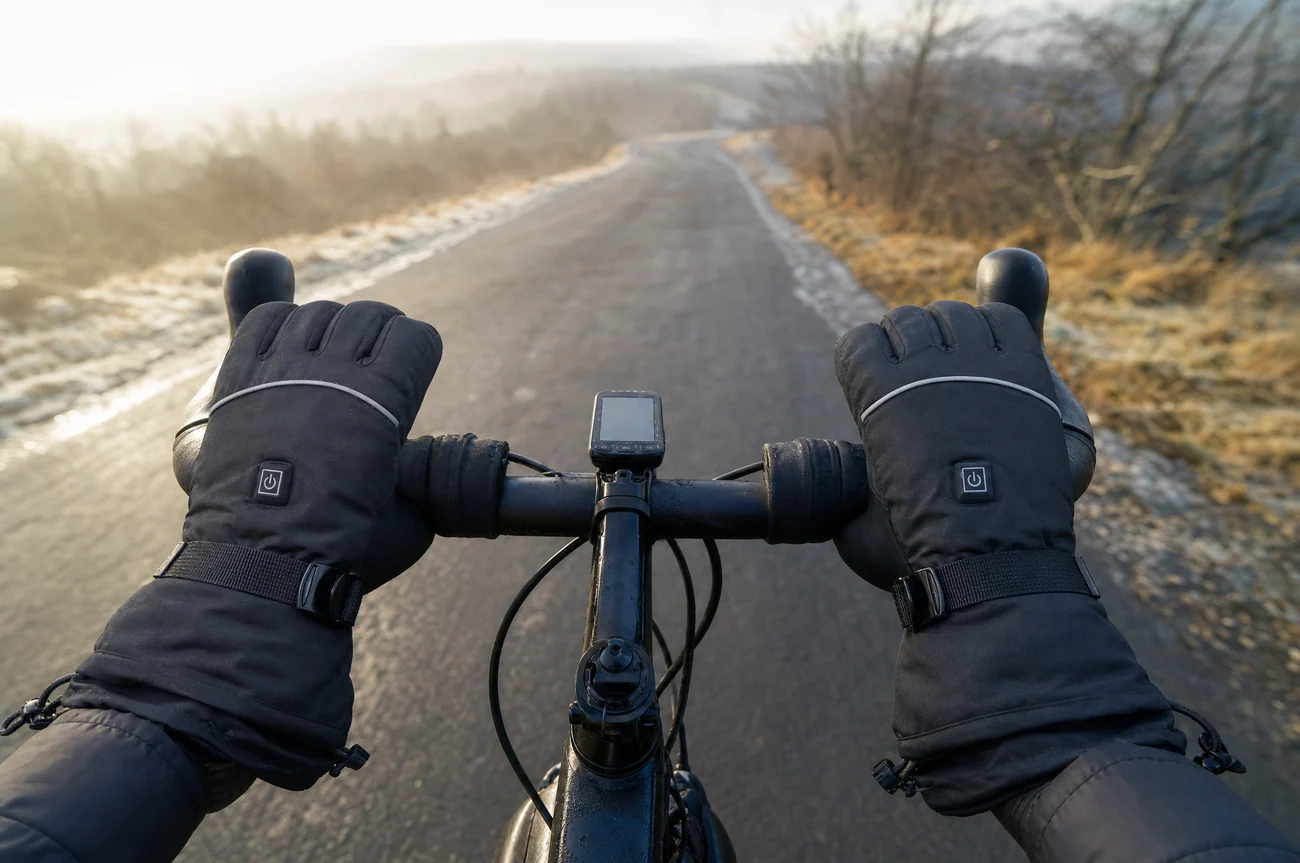
Why bike hands get so cold
Riding makes its own wind. Even on a still morning, moving at commuting speed pushes cold air over your hands the whole time, and that moving air carries warmth away far faster than still air does. Your hands also do very little work on the bars, so they make little heat of their own.
That is why the same gloves that are fine on a walk can feel thin on a bike, and why heat at the fingers, plus a glove that blocks wind, makes such a difference.
Brakes, shifters and grip
Control comes first. A heated glove is thicker than a summer or light winter cycling glove, because it carries a heating element, insulation and a battery pocket. Before you ride in traffic, check with the gloves on that you can:
- Pull both brake levers fully and quickly.
- Work your shifters or twist grip without fumbling.
- Grip the bars firmly over bumps.
- Signal clearly and get a hand back to the bar fast.
If any of those feel clumsy, the glove is wrong for your bike, however warm it is. Our glove is an insulated winter glove rather than a slim cycling-specific one, so try it on your bike before relying on it, and if it does not suit, see our returns page for how returns work.
Switching the heat on a bike
Most heated gloves have a button on the back of the hand. On a bike, that is good and bad: easy to reach with the other hand at a stop, but not something to fiddle with while riding.
A simple habit works well. Charge the packs before you leave, switch the heat on and choose a setting while you are still at the door, and only change it at lights or when you stop. Our gloves have a button on the back of the hand that starts the heat and moves between three settings.
Rain, spray and wind
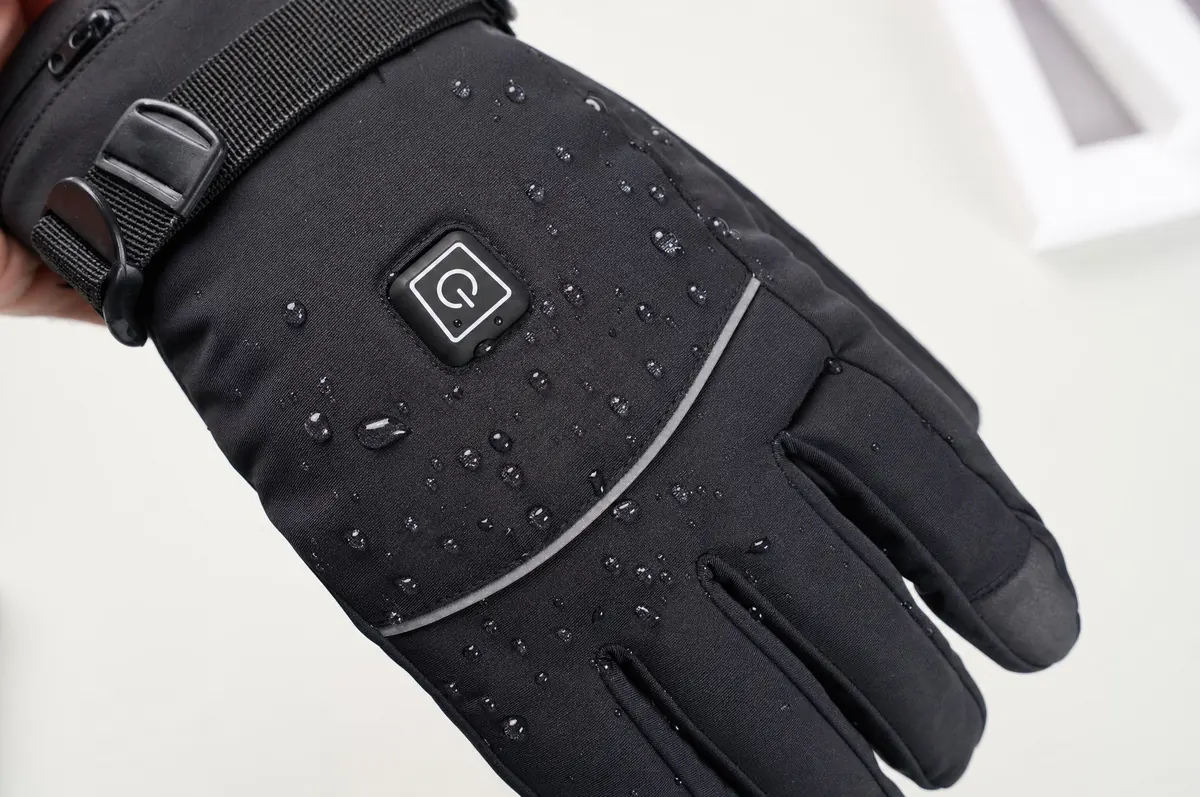
Winter riding often means wet roads, and wet gloves lose warmth quickly. If you ride in rain or heavy spray, a glove stated to be waterproof, or a waterproof shell over the top, will do more for you than heat alone.
Our glove has a double-strand taslon outer and a velvet thermal lining, but the maker does not state that it is waterproof or windproof, so we do not claim either. It suits dry, cold rides best. If it does get wet, keep the power packs and their leads dry, and let the gloves dry fully at room temperature before charging and using them again.
Small things that help on a bike
- Use the wrist strap and cuff drawcords to close the gap between glove and sleeve, where cold air gets in at speed.
- Use the touchscreen thumb and index finger to check a map at a stop, not while moving.
- Wear reflective or bright layers. Black gloves do little for visibility, so do not rely on them for hand signals after dark.
- Put the gloves on with warm hands and the heat already on, rather than trying to warm frozen fingers on the move.
Where our gloves fit for cycling
Our supplier lists these gloves for cyclists and skiers, and the features suit a winter commute: three heat settings, a rechargeable power pack for each glove in a zip pocket on the cuff, a wrist strap, cuff drawcords and touchscreen panels on the thumb and index finger.
They are a better fit for dry commuting and steady riding than for long wet rides or racing, where a slimmer or waterproof glove makes more sense. They come in one size, L, and the maker gives no run time, so plan your first few rides around a short commute until you know how they suit you. For how heated gloves compare more widely, see the buying guide.
Questions
Are heated cycling gloves worth it?
For riders who commute through cold, dry winters, often yes, because riding makes its own wind and ordinary gloves struggle. For wet riding, a waterproof glove matters more than heat.
What gloves are best for riding a bike in winter?
Ones that keep your fingers warm, block wind, and still let you brake and shift without fumbling. Check control first, then warmth.
Can I use these heated gloves on a motorcycle or e-bike?
The maker lists them for cyclists and skiers. They are not motorcycle protective gloves and have no impact or abrasion rating, so do not use them where protective gloves are needed.
Will the heat button get pressed by accident?
It sits on the back of the hand, so it is unlikely to be pressed by gripping the bars. Set the heat before you ride and only change it when stopped.