Guide
Heated gloves for skiing and snowboarding: what actually matters
Cold hands end more ski days than tired legs. The chairlift is usually the worst of it: sitting still in the wind, high up, with hands that were sweating on the last run.
Heated ski gloves can help a lot, but on a mountain, staying dry matters as much as adding heat. This page covers both, and is plain about where our glove fits.
Updated · Specifications are the maker's own. Where the maker gives no figure, we say so.
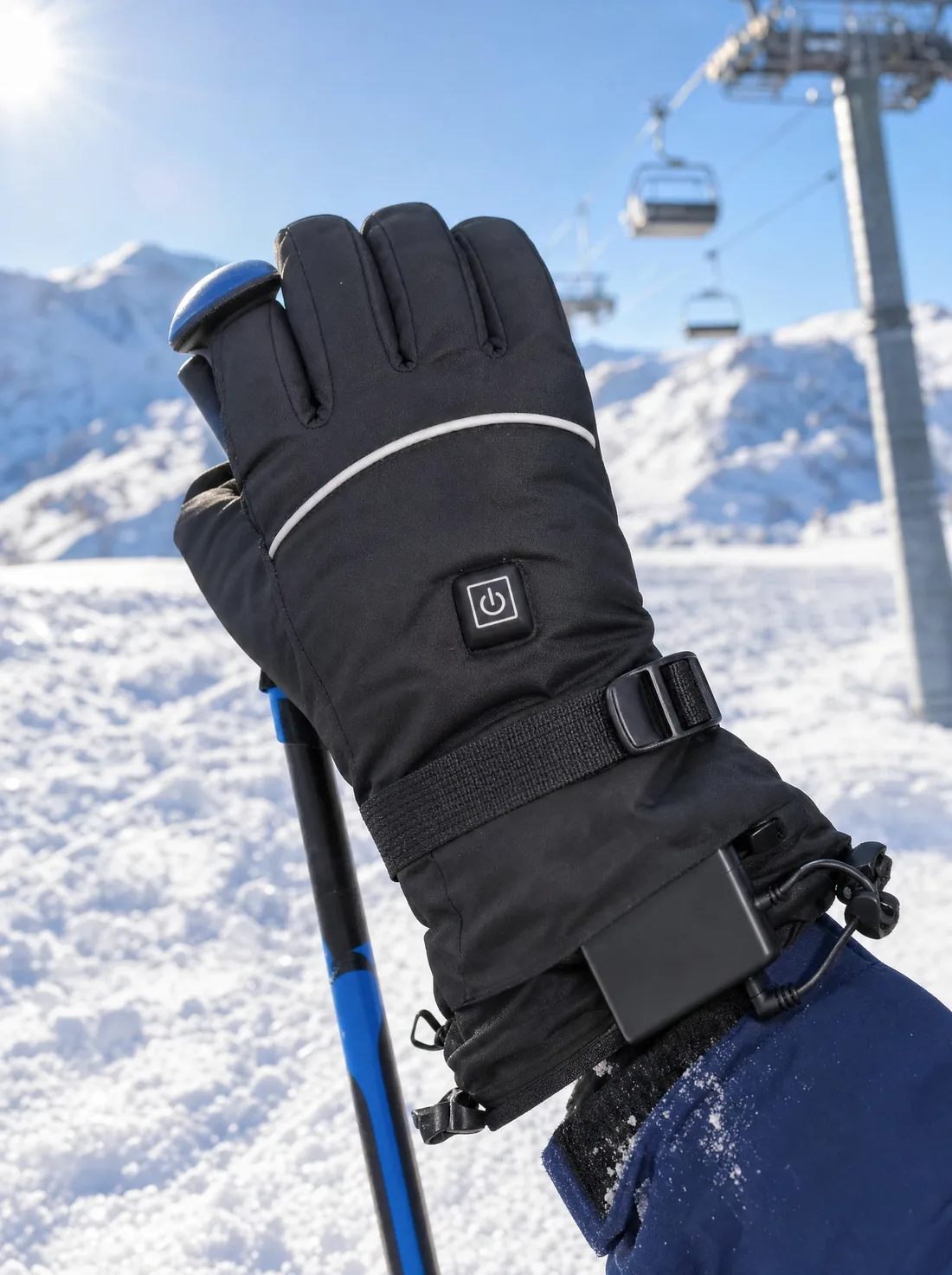
Why hands get cold on the mountain
Skiing and snowboarding swing between hard work and sitting still. On a run your hands warm up and can get damp inside the glove. On the lift they stop moving, the wind picks up, and that dampness pulls warmth away. Add snow on the gloves from a fall or adjusting a binding, and ordinary gloves can soak through by lunch.
Heat helps on the lift and in the lift line. But a heated glove that gets wet through is fighting a losing battle, which is why waterproofing comes first for snow sports.
Waterproofing comes first
Dedicated ski gloves are usually built with a waterproof membrane and a long gauntlet cuff that goes over your jacket sleeve. If you fall a lot, ride powder, kneel to strap in, or ski in wet snow, look for a glove that clearly states it is waterproof.
Our glove is not stated to be waterproof. The maker describes a double-strand taslon outer with a velvet thermal lining, and gives no waterproof or windproof rating, so we do not claim either. That makes it a partial fit for snow sports: fine for cold, dry days, the lift line and the walk to the car, and a poor choice for wet snow or days spent in the powder.
Where heated gloves earn their place on a ski day
- Long chairlift rides on cold, windy days.
- Standing in lift lines or waiting for friends at the top.
- Cross-country ski outings in dry cold.
- Watching, teaching or supervising on the slopes rather than skiing hard.
- The walk from the car park and the time spent in the base area.
On those parts of the day, steady heat at the push of a button makes a real difference. Our gloves have three heat settings, switched with the button on the back of the hand.
Poles, buckles, phones and the lift bar
Check that you can do the fiddly things with the gloves on: grip a pole strap, open and close boot buckles or binding straps, pull a zip, and get a lift pass out of a pocket. A heated glove is thicker than a thin liner, so some fine work will be slower.
Our glove has touchscreen panels on the thumb and index finger, so you can check a trail map app or a message on the lift without taking a glove off. The wrist strap means a glove you pull off on the lift stays attached to your wrist instead of dropping into the snow below.
Battery care in the cold
Cold weather shortens any lithium battery's run. On a ski day, that means a few habits are worth building:
- Charge both packs fully the night before.
- Start on a lower setting and turn it up on the lift, rather than running the highest setting all day.
- Switch off when you go in for lunch, and keep the packs somewhere warm and dry.
- Keep the packs and leads away from snow and meltwater.
The maker of our glove does not publish a run time or a battery capacity, so we cannot tell you how long the heat lasts on a ski day. It depends on the setting and the conditions. We do not sell a spare pack either, because our supplier does not offer one that is confirmed to fit.
Fit and the cuff
Our glove has a cuff with a zip pocket for the power pack and drawcords to close it. Pull the drawcords tight and settle the cuff against your jacket sleeve so there is no gap at the wrist, which is where snow gets in when you fall or reach down.
It comes in one size, L, with no hand measurements from the maker. If you plan to wear a liner underneath, or have small hands, email [email protected] before you order.
Questions
Are heated ski gloves worth it?
For people whose hands get cold on the lift, often yes. But on snow, a waterproof glove matters as much as heat, so choose waterproofing first if you ski in wet snow or fall often.
Are your heated gloves waterproof for skiing?
No waterproof claim is made. The maker does not state that they are waterproof or windproof, so they suit cold, dry days and lift rides more than wet snow.
Can I use heated gloves for snowboarding?
Yes, on dry, cold days, but snowboarding means more hand contact with snow when you sit, fall or strap in, so a glove that is not waterproof will get wet faster. Consider a waterproof glove for those days.
How long will the heat last on a ski day?
The maker does not publish a run time, so we do not give one. Cold weather and higher settings both shorten it. Starting on a lower setting helps.